
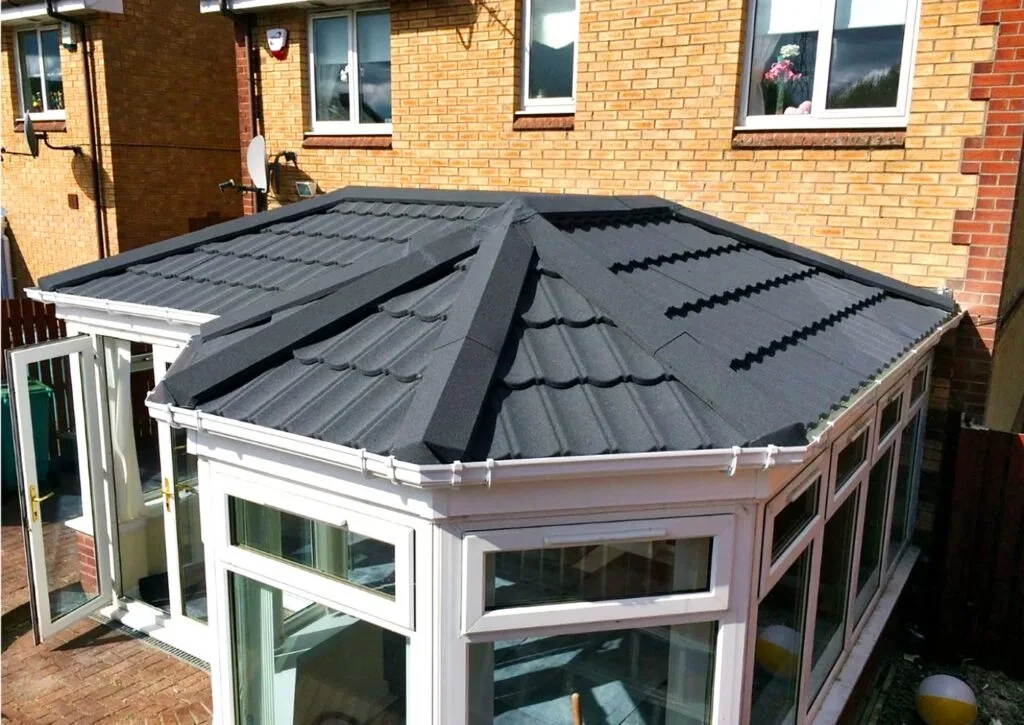
Why conservatory roofs fail long before the rest of the house
If your conservatory has quietly turned into a room you walk past rather than a room you use, the roof is almost always the reason. A tired conservatory roof lets in cold, damp and noise long before it looks obviously broken, which is why most homeowners put up with it for years before doing anything about it.
The rest of your house roof is built to last decades. The original roof on a conservatory usually is not. Most were built as lightweight, seasonal covers rather than as part of the insulated shell of the home, so they age on a completely different timetable to the tiles above your bedroom. That gap is the single most useful thing to understand before you spend any money.
This guide walks through the eight practical signs that your conservatory roof needs replacing, how to tell a repair job from a replacement, what the work involves, and how long it takes. If you already know you need the work done, you can go straight to conservatory roof replacement across Glasgow and Central Scotland.
In this article
- Why conservatory roofs fail long before the rest of the house
- The 8 signs your conservatory roof needs replacing
- Repair or replace: how to tell which one you actually need
- Tiled, glass or polycarbonate: choosing the replacement roof
- What a conservatory roof replacement actually involves
- How long the work takes, and what delays it
- What it costs, and spreading the payments
- Planning permission and permitted development in Scotland
- Questions to ask before you accept a quote
- Getting your conservatory roof looked at
- Frequently asked questions
The 8 signs your conservatory roof needs replacing
None of these on its own proves you need a whole new roof. Two or three together usually does, and the last one on the list quietly explains most of the others.
1. It is too hot in summer and too cold in winter
The most common complaint by a distance is that the room is unusable for half the year, stifling under the summer sun and freezing the moment the temperature drops. Older polycarbonate conservatory roof panels offer almost no insulation, so the room simply tracks the weather outside instead of holding a stable temperature. A modern replacement, whether tiled or high performance glass, is designed to keep the room usable in every season rather than three months of it.
2. Persistent condensation or damp patches
Condensation running down the glazing bars, a musty smell that never quite clears, or damp patches creeping across the ceiling panels all point to insulation and ventilation that have failed. Left alone, that moisture works into the frame and the surrounding brickwork, which turns a roof job into a much larger repair. If damp has only appeared in the last year or two, get it looked at before it spreads beyond the roof.
3. Cracked, discoloured or leaking panels
Polycarbonate yellows and goes brittle under years of UV, and once it cracks, water finds the seams. A few damaged panels can often be patched. Once the discolouration and the leaks are spread across the whole roof, patching stops being good value and a full replacement becomes the more sensible fix.
4. Constant noise from rain or wind
A thin polycarbonate roof turns an ordinary shower into a drumming that drowns out conversation, and strong wind can set the whole structure creaking. This is not a fault, it is the design: there is almost no mass or insulation in the original roof to absorb sound. Homeowners who move to a tiled or laminated glass roof consistently say the drop in noise is the first thing they notice, ahead of the temperature.
5. Heating that never seems to make a difference
If the conservatory has its own heater or radiator running more or less permanently just to be comfortable, the roof is telling you something. A poorly insulated roof sheds heat as fast as you can put it in, so you are effectively paying to warm the garden. A well insulated replacement brings the room back inside the heated envelope of the house rather than sitting outside it.
6. Sagging, bowing or movement in the frame
Visible dips in the roof line, gaps opening between panels, or noticeable movement when the wind gets up point to a structural problem rather than a cosmetic one, usually failed fixings or panels that are no longer carrying the load as designed. This is the one sign on the list where waiting is the wrong call, because the risk of water getting in and the movement worsening only grows. Get a specialist to look at it promptly.
7. Faded furniture, curtains or flooring
If the sofa, blinds or floor inside the conservatory have visibly bleached, the roof is letting through more UV than it should. This is common with older clear polycarbonate and with basic glass roofs that were never specified to filter UV properly. Modern roofing materials cut UV transmission substantially, which protects both the comfort of the room and whatever you keep in it.
8. The roof is simply old
Most polycarbonate conservatory roofs are designed to last roughly 10 to 15 years before the seals and the insulating properties degrade meaningfully, even where nothing has visibly failed. If you do not know the age of yours, or you know the conservatory went up more than a decade ago, it is worth having it assessed. Catching it before a leak forces the decision usually means more choice over materials, and more control over when the work happens.
Repair or replace: how to tell which one you actually need
Not every conservatory roof problem needs a full replacement, and any company that tells you otherwise before looking at it is guessing. The signs above tend to sort themselves into two groups fairly cleanly.
Usually repairable: a single leak, one or two cracked panels, a failed seal along one run of glazing bar, or a blocked gutter causing localised damp. This is targeted work, and it is exactly what the Speedy Roofing roof repairs team handles day to day.
Usually a replacement: insulation failure across the roof, discolouration or brittleness spread over most of the panels, sagging or movement in the structure, or a roof that is simply at the end of its design life. Patching any of these buys months, not years.
There is a third option people ask about, which is tearing the whole conservatory down and rebuilding. That is rarely necessary. If the frame, walls and base are structurally sound, replacing only the roof is far less disruptive and keeps the parts of the structure that are still doing their job.
Tiled, glass or polycarbonate: choosing the replacement roof
Once you have accepted the roof is going, the real decision is what replaces it. This is where most of the difference in comfort, and most of the difference in price, actually sits. A tiled conservatory roof and a high performance glass roof solve the same problems in very different ways.
Speedy Roofing’s tiled systems use lightweight Metrotile panels on a Glulam ringbeam structure, which is what allows the roof to be swapped without rebuilding the existing conservatory walls in most cases. If you want the detail on how the insulation actually performs, there is a fuller explanation in the benefits of an insulated tiled roof for your conservatory.
Seeing the systems in person makes the choice considerably easier than looking at photographs. You can visit the Speedy Roofing showroom to compare the tile finishes and the glass options side by side before committing to either.
What a conservatory roof replacement actually involves
A conservatory roof replacement is not a like for like swap of the same panels. The existing polycarbonate or glass roof comes off, and an insulated structure goes on in its place. This is sometimes called a conservatory roof conversion, because the outcome is a room that behaves like an insulated part of the house rather than a seasonal add on.
- Survey first. A specialist checks the frame, the base and the existing fixings, and confirms whether the structure can carry the replacement roof without alteration. This is also when any permitted development questions get settled.
- Written quote. You should receive a detailed written quote against your specific conservatory, not a rate per square metre applied blind.
- Strip out. The old roof comes off, usually in a single day, and the structure is made weathertight as the work progresses.
- New structure and insulation. The ringbeam and insulated panels go on, followed by the external finish and any rooflights.
- Internal finish. A plastered internal ceiling is what makes the room stop looking like a conservatory and start looking like a room. Ask whether it is part of your quote or a chargeable extra.
One thing worth raising at survey stage: if your main house roof is likely to need attention in the next few years, ask about doing both together. Sharing the scaffolding and the site setup across two jobs is usually cheaper than commissioning them separately eighteen months apart.
How long the work takes, and what delays it
This is the question homeowners ask most often and get answered least clearly. Speedy Roofing publishes a working figure of 2 to 4 days for a new conservatory roof system to be installed, once the survey is done and the quote is agreed. The size of the roof and the material chosen move that figure more than anything else.
What sits either side of those few days matters just as much:
- Survey to quote. Usually a short turnaround, since the survey is what the quote is built from.
- Quote to start date. This is normally the longest part of the process and depends on the current order book and on lead times for the roof system itself.
- Installation. The 2 to 4 days above.
- Internal finishing. If a plastered ceiling is included, allow drying time before decorating.
Autumn and winter are not off limits for this work, and there is a practical argument for booking it before the cold sets in rather than after: the roof you are replacing is the reason the room is cold in the first place.
What it costs, and spreading the payments
Conservatory roof replacement costs move with three things: the size and shape of the conservatory, the roofing material you choose, and whether any work is needed to the existing frame before the new roof can go on. That last one is why online estimators are unreliable. They cannot see the condition of the structure underneath, and that is frequently what decides the number.
A written, no obligation quote taken from a survey of your actual conservatory is the only figure worth planning around. If you want to see the range before committing to a visit, the conservatory roof replacement service page sets out what is included in a quote and how the work is priced.
For homeowners who would rather spread the cost than pay upfront, Speedy Roofing offers finance on roofing projects, with fixed monthly repayments and terms of 36, 48, 60 or 120 months, provided through a lender authorised and regulated by the FCA. The full representative examples, the APR and the eligibility detail are set out on the roofing finance page. Check the figures there rather than relying on a headline monthly number, because the deposit and the term change it considerably.
Whichever route you take, ask for the quote in writing and ask what is excluded as well as what is included. Scaffolding, waste removal and internal plastering are the three items most often left off a cheap quote and added later.
Planning permission and permitted development in Scotland
In most cases, replacing a conservatory roof falls within permitted development and does not need planning permission, because you are altering an existing structure rather than extending the footprint of the house. That is the general position, not a guarantee for your specific property.
It can change if you live in a conservation area or a listed building, if the conservatory was built under a condition attached to an earlier consent, or if the replacement changes the height or the profile of the roof significantly. Your local council is the authority on this, and any competent installer will raise it at survey stage rather than leaving you to discover it later.
Building standards are a separate question from planning permission, and the two get confused constantly. Ask your installer to confirm in writing which, if either, applies to your job before work starts.
Questions to ask before you accept a quote
- Has anyone physically surveyed my conservatory? A quote produced without someone looking at the frame and base is an estimate wearing a quote’s clothing.
- What exactly is included? Get scaffolding, waste removal, internal plastering and making good listed explicitly, included or excluded.
- What roof system is being fitted, by name? “Insulated tiled roof” is a category. You want the manufacturer and the product.
- What guarantee comes with it, and who stands behind it? Ask what the guarantee covers, how long it runs, and whether it is backed by the installer or the manufacturer.
- Does my conservatory need any structural work first? If the answer is no, ask them to confirm that in writing after the survey.
- What is the realistic start date, not the earliest possible one? Lead time on the roof system is usually the constraint, not the installer’s diary.
- Who is actually doing the work? Ask whether the job is carried out by the company’s own teams or subcontracted out.
Getting your conservatory roof looked at
Speedy Roofing carries out conservatory roof replacement and conversion work across Glasgow, South Lanarkshire, Renfrewshire, Inverclyde, North Lanarkshire, West and East Dunbartonshire, Falkirk, Stirling and Ayrshire.
Every job starts with a free, no obligation survey and a detailed written quote, so you know what you are paying for before anything is agreed. You can book a free conservatory roof survey, get your free written quote, or contact the Speedy Roofing team if you would rather talk it through first. If you want to see how other conservatory jobs have gone before you call, read what previous customers have said.
Frequently asked questions
How long does a conservatory roof replacement take?
Speedy Roofing publishes an installation window of 2 to 4 days for a new conservatory roof system, once the survey has been carried out and the quote agreed. The size of the roof and the material chosen are what move that figure. Allow additional time between accepting the quote and the start date, since lead time on the roof system is usually the longest part of the process.
Does bad weather delay a conservatory roof replacement?
It can, but less than most people expect. The weather sensitive stage is the strip out, when the old roof is off. A competent installer works in sections and keeps the structure weathertight rather than opening the whole roof at once. Heavy sustained rain or high winds may add a day. Ordinary Scottish weather generally does not stop the job.
Can I replace just the roof and keep my existing conservatory frame?
In most cases, yes. If the frame, walls and base are structurally sound, replacing only the roof is the usual approach and it is considerably less disruptive than rebuilding. Lightweight tiled systems on a ringbeam structure are designed specifically so the existing walls do not need altering. The survey confirms whether that applies to your conservatory.
Will a tiled conservatory roof make the room darker?
It reduces direct overhead light, which is the main trade off. Most tiled conversions include rooflights or a lantern section to keep the room bright while removing the heat loss and glare of a fully glazed roof. Deciding where those rooflights sit at survey stage, based on how you actually use the room, makes more difference than the number of them.
Do I need planning permission to replace a conservatory roof?
Usually not. Most conservatory roof replacements fall within permitted development because they alter an existing structure rather than extend the property. It can differ if you are in a conservation area, in a listed building, or if the new roof changes the height or profile significantly. Your local council is the authority, and it should be checked as part of the survey.
How much does a replacement conservatory roof cost?
It depends on the size and shape of the conservatory, the roof system chosen, and whether the existing frame needs work first. That third factor is why online estimators are unreliable, since they cannot see the structure underneath. A written quote from a survey of your specific conservatory is the only figure worth planning around, and finance is available if you would rather spread the cost.


